
Cincinnati’s Flying Pig Marathon Just Ran Into History
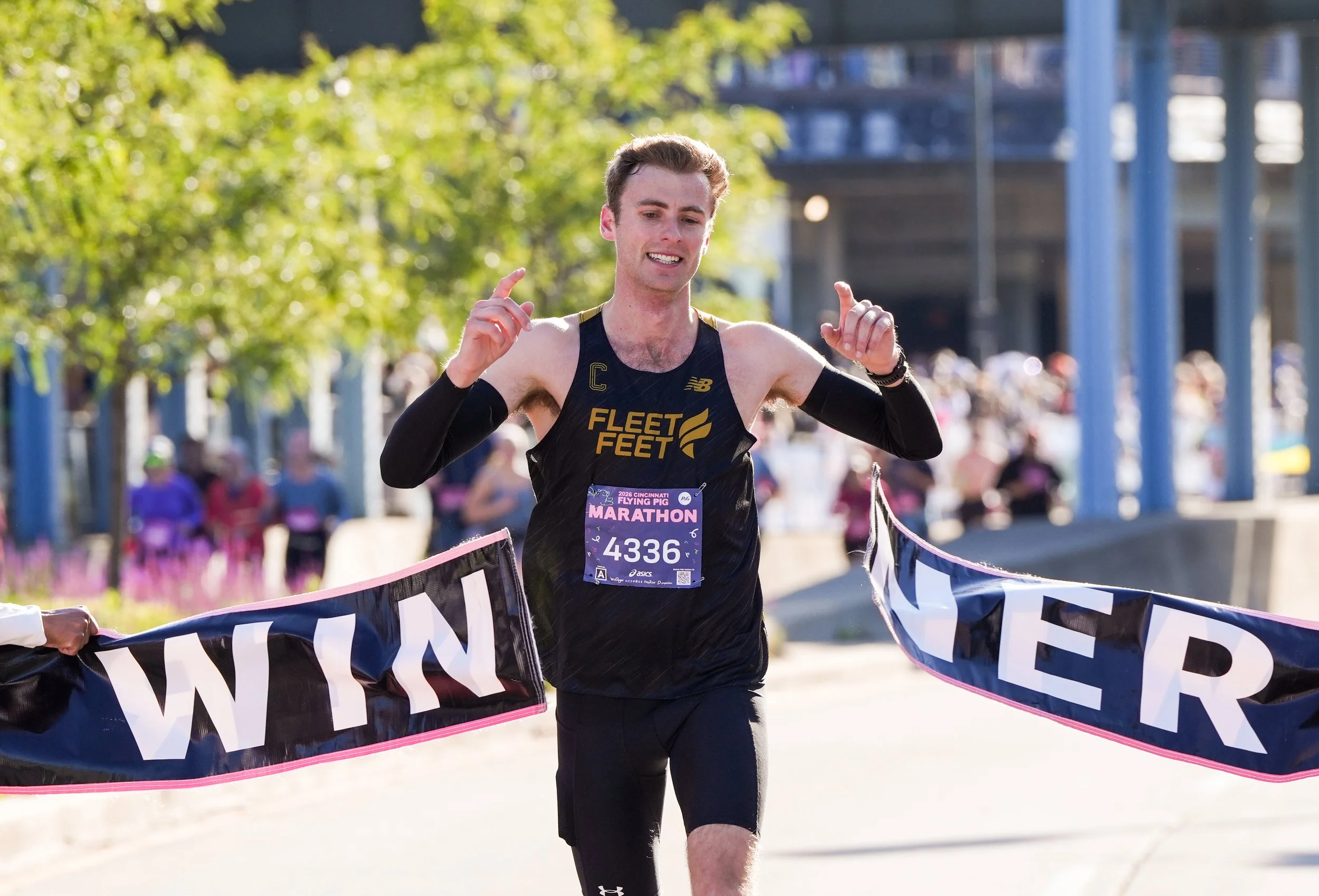
Cincinnati has always known how to turn a race into a citywide celebration. The hills have rhythm, the neighborhoods have personality and the crowds understand their role. They ring cowbells, wave homemade signs, hand out encouragement and make every runner feel like the whole city is pulling them toward the finish line. In 2026, the Flying Pig Marathon gave Cincinnati something even bigger to cheer about. The 28th Annual Flying Pig Marathon became the largest and fastest weekend in the event’s history, with a record 45,197 registered participants across three days of events and a new men’s marathon course record from Zach Kreft, a 26-year-old from Sunbury, Ohio, who won in 2:17:40. That broke Cecil Franke’s 20-year-old event record by 2 minutes and 44 seconds and put a fresh stamp on one of Cincinnati’s signature civic celebrations.
That kind of weekend deserves more than a results roundup. It deserves a lap around the city. The Pig, at its best, is Cincinnati in motion. It is elite runners chasing records, weekend warriors chasing personal bests, families chasing finish-line hugs, charity runners chasing a cause and entire neighborhoods creating the kind of joyful noise that can carry people through the hardest miles of a marathon. The 2026 race weekend delivered all of that at historic scale, blending competitive excellence with the unmistakable civic personality that has made the Flying Pig one of the most beloved race weekends in America.
A Course Record That Was 20 Years in the Making
Kreft’s win immediately becomes one of the defining performances in Flying Pig history. The previous record of 2:20:24 had stood since 2006, meaning two full decades of runners had tried to clip it, chase it, study it and survive the course with enough left in the tank to threaten it. Kreft finally did it, and he did it on a course that asks plenty from anyone trying to run fast. Cincinnati’s marathon route has texture. It has climbs, turns, neighborhood shifts and emotional surges. It requires a runner to stay smart early, stay tough late and stay steady when the course begins asking sharper questions.
Kreft understood the assignment. He said he wanted to go out conservatively, work the back half and target the course record. That plan turned into execution, and execution turned into Flying Pig history. His Cincinnati win also adds another major line to a remarkable Ohio running résumé. Kreft set the Ohio High School 5K record at Buckeye Valley High School, won four state titles, ran at the University of Notre Dame and has now won major Ohio marathons in Columbus, Cleveland, Air Force and Cincinnati. That gives the 2026 Flying Pig a statewide storyline. Ohio distance running has a new benchmark, and Cincinnati now owns one of its signature performances.
The Crowd Helped Bring the Record Home
Kreft credited the crowd and the energy of Cincinnati after the race, and anyone who has run or watched the Flying Pig knows exactly what he meant. The Pig has a course map, a medal and a timing mat, but its true infrastructure is human. The event runs on volunteers with water cups, families sprinting between viewing spots, spectators near tough climbs and strangers who somehow know exactly when a runner needs to hear their name.
That atmosphere matters, especially late in a marathon when effort becomes math and every mile asks for a little more than the one before it. Cincinnati helped pull a record out of the morning because the Flying Pig crowd understands the emotional economy of endurance sports. A cheer can sharpen focus. A sign can break tension. A familiar neighborhood can turn fatigue into momentum. On Sunday, that energy helped turn an already fast run into a historic one.
Cincinnati Women Took Over the Marathon Podium
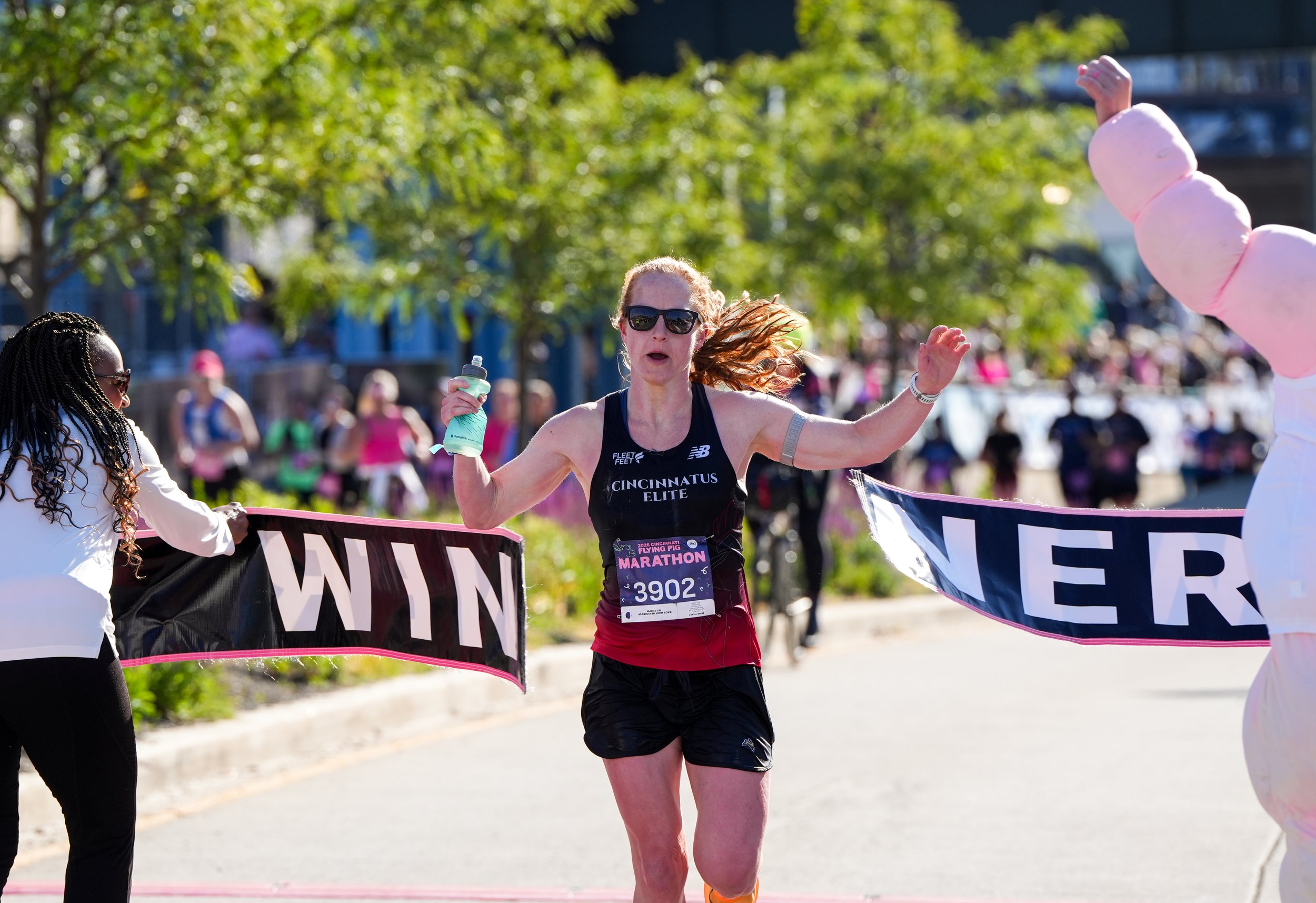
The women’s marathon gave the weekend a second headline with deep local pride. Katie Hallahan, 32, of Cincinnati, won in 2:48:43 after finishing second in the Flying Pig Marathon in 2023 and winning the Queen Bee Half Marathon that same year. In 2026, she came back and claimed the marathon title. Then Cincinnati kept showing up. Daniella Townsend, also of Cincinnati, finished second in 2:49:46, and Morgan Gaskins, another Cincinnati runner, finished third in 2:53:28.
That all-local women’s podium says plenty about the strength of the city’s running community. Cincinnati is producing runners who can compete, contend and win on one of the region’s biggest stages. Hallahan’s post-race comments captured the feeling beautifully, praising the positivity, encouragement and neighborhood support that define the local running scene. For a city that loves its sports identity, this deserves a louder place in the conversation. Cincinnati running is having a moment, and the Flying Pig just gave it a finish-line photo.
The Biggest Pig Ever
The scale of the 2026 weekend should make runners, civic leaders, tourism officials and local businesses pay attention. The Flying Pig welcomed 45,197 registered participants across three days, surpassing the previous event record of 43,127 set in 2018. The Full Marathon had 6,202 registrants and reached 100% capacity. The Paycor Half Marathon had 13,750 and also reached 100% capacity. The City Dash 4-Person Relay, Toyota 10K and Queen City Running Co. 5K all hit capacity as well.
Those numbers show demand across every lane of the running world. The marathoners came ready for the full 26.2. The half marathoners packed one of the weekend’s most popular events. The 10K and 5K brought speed, accessibility and community energy. The children’s events, PigAbilities, Flying Piglet, Flying Fur and Fifty West Mile gave the weekend reach across ages, abilities and motivations. That structure is one of the Flying Pig’s great strengths. The weekend gives serious runners a serious stage while making room for first-timers, kids, families, walkers, adaptive athletes and people who simply want to be part of something joyful. That kind of participation mix is how a race becomes part of a city’s identity.
The Pig Is a Running Festival With Real Economic Muscle
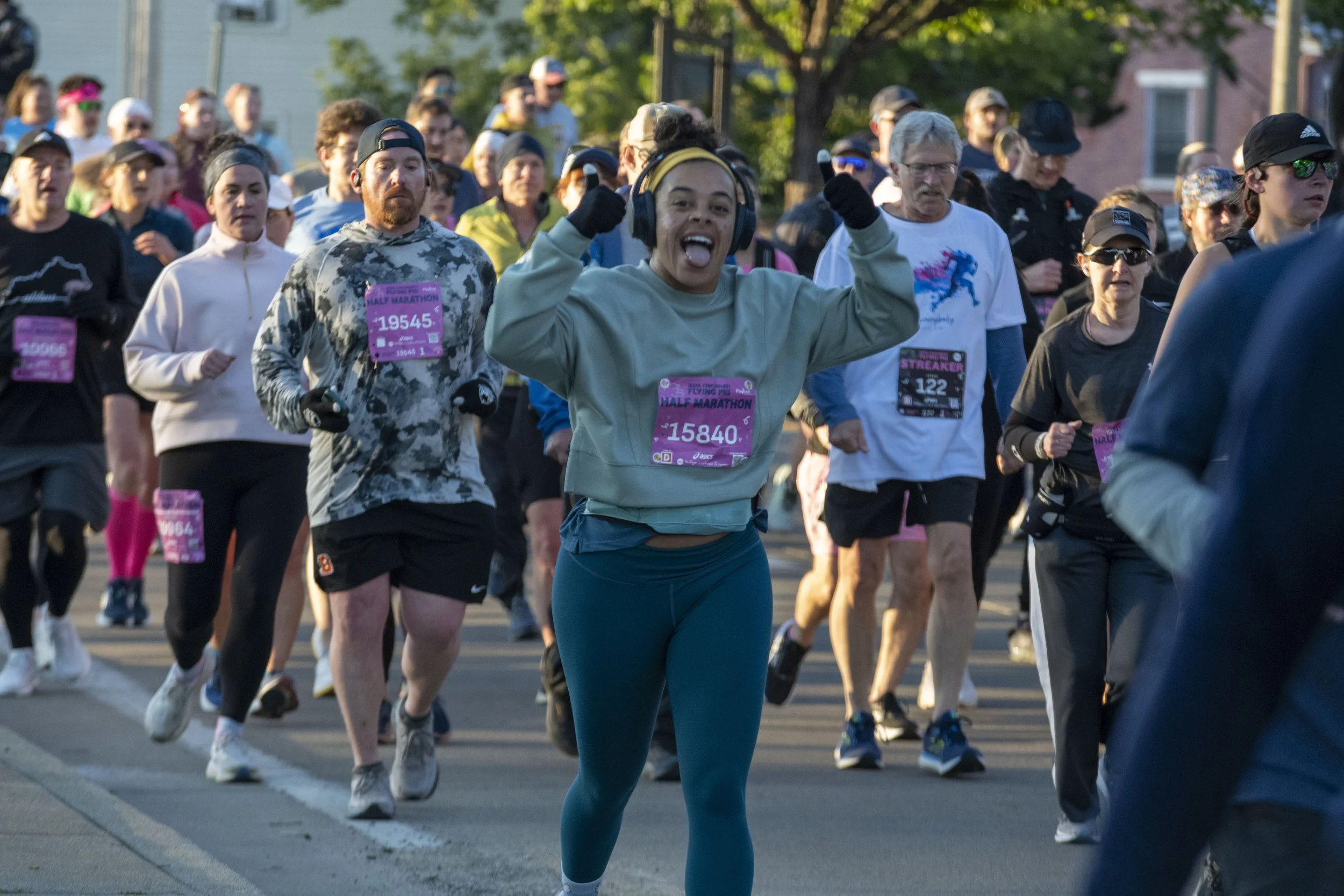
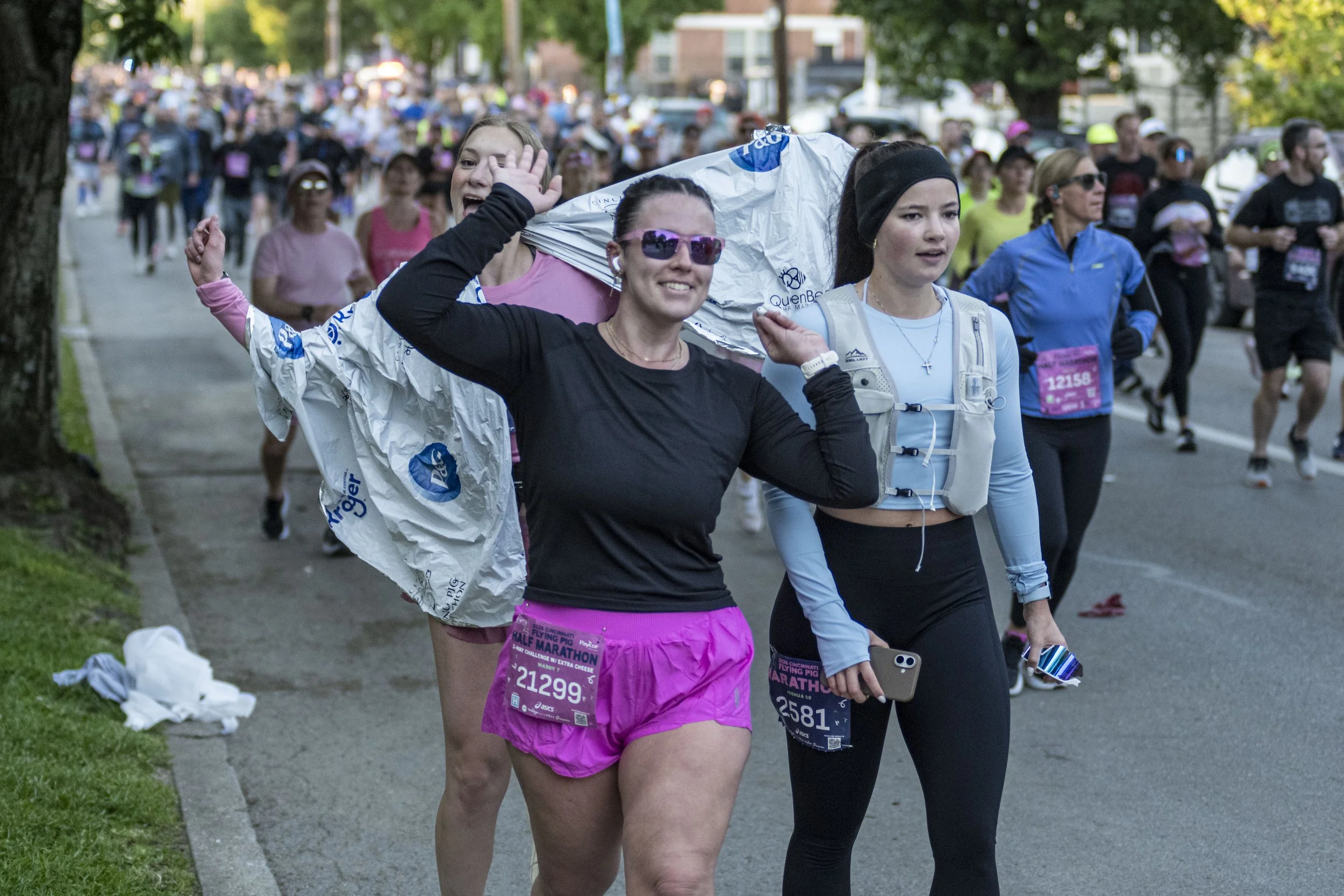
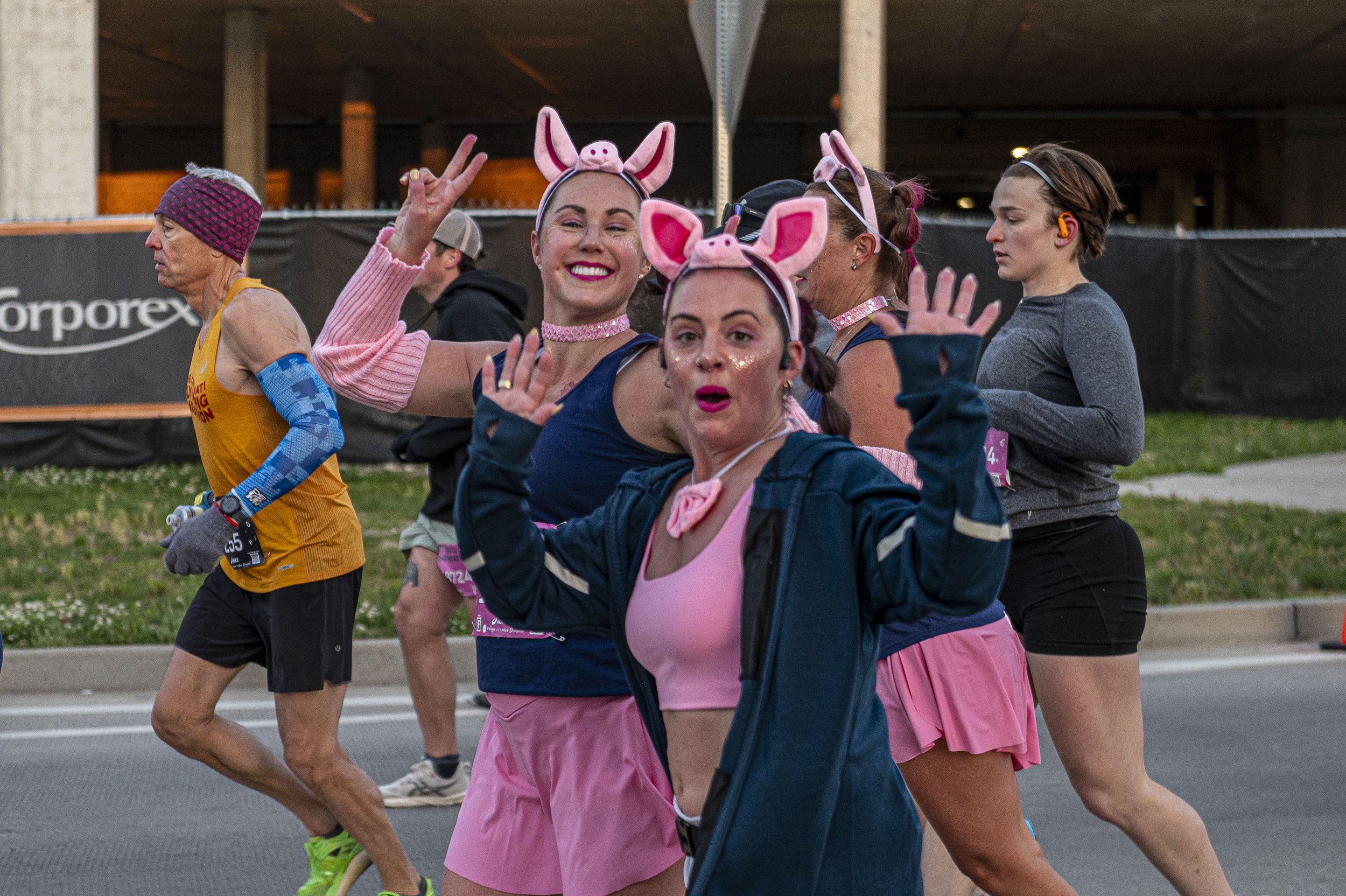
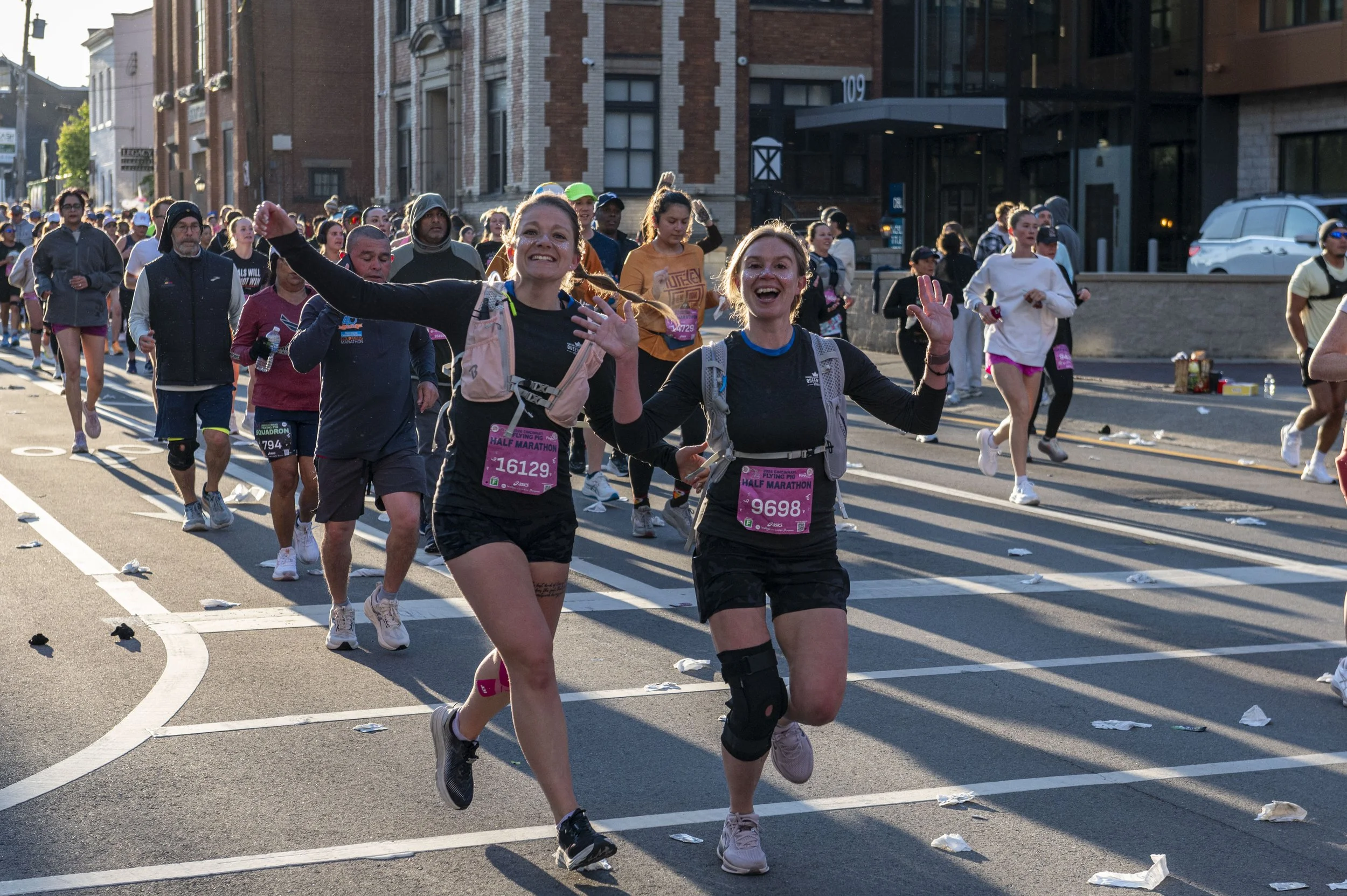
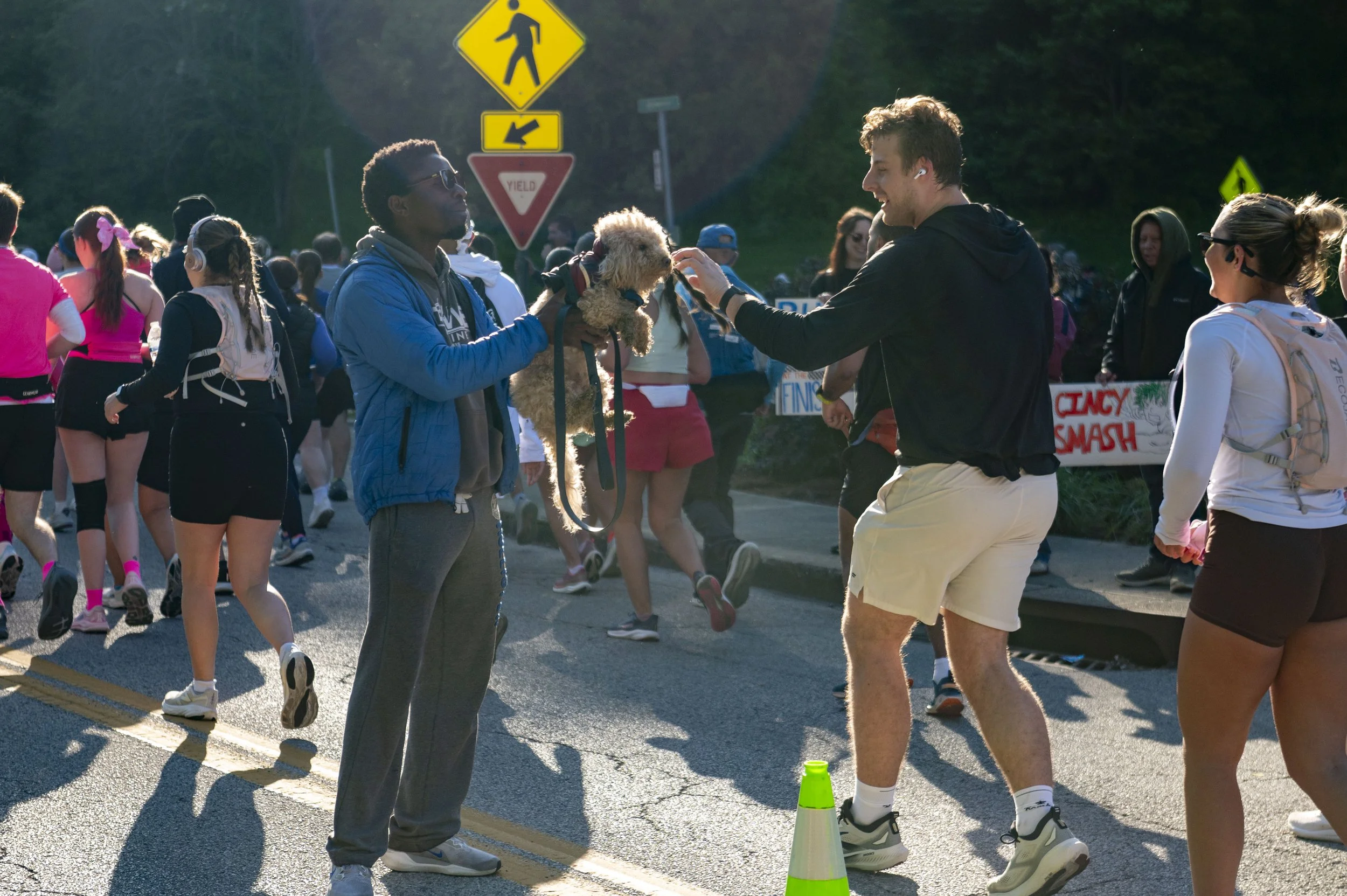
The Flying Pig’s growth also carries real economic meaning. Pig Works has reported that the 2025 Flying Pig Marathon generated an estimated $45.9 million in total economic impact for the region, based on a report from the Center for Research and Data at the Cincinnati USA Regional Chamber. That figure helps explain why the Pig matters beyond the finish line. Hotel rooms fill, restaurants benefit, local shops see traffic, families travel, spectators gather, volunteers mobilize and media attention follows. Cincinnati gets a weekend where its streets, landmarks, neighborhoods and hospitality are all on display.
The race has become one of Cincinnati’s most effective invitations. Come run here. Come cheer here. Come spend a weekend here. Come see what this city can do when it turns a marathon into a full civic production. The Flying Pig also has an ambitious eye toward the future, with Pig Works connecting its growth plans to the “When Pigs Fly, Anything’s Possible” capital campaign. The organization has tied that campaign to goals that include expanding participation and increasing annual economic impact, which makes the 2026 record weekend feel like both a milestone and a launching point.
The Charity Engine Keeps the Pig Flying
The Flying Pig’s impact is also philanthropic. Pig Works works with more than 300 charities and raises close to $1 million annually for philanthropic partners, with more than $18 million raised through the Flying Pig event over the past 26 years. That charitable layer gives the weekend a deeper pulse because many runners are carrying more than a pace goal. Some are racing for memory, mission, healing, gratitude or a cause that carried them through training.
The Pig has always had room for all of that. Competitive fire, community pride, fundraising, family tradition, personal reinvention, costumes, cowbells, tears, pancakes and finish-line medals all fit into the same weekend. The beautiful absurdity of a city waking up early to watch thousands of people voluntarily run through its hills is part of the charm, but the deeper value comes from how many people and organizations the weekend lifts. Cincinnati should protect it, promote it and keep investing in it.
The Weekend Was Deep From the Mile to the Marathon
The 2026 results also showed the competitive depth of the full weekend. In the Paycor Half Marathon, Simon Heys of Wilmington, Ohio, won the men’s division in 1:09:58, while Amanda Zerhusen of Cincinnati won the women’s division in 1:19:50. In the Toyota 10K, former Flying Pig Marathon winner Jack Randall of Cincinnati took the men’s title in 32:37, while Alisha Detmer won the women’s race in 36:55. In the Queen City Running Co. 5K, William Doering of Fort Thomas defended his title in 15:24, nearly 20 seconds faster than his winning time from the previous year. Katie Ruhlman of Dayton defended her women’s 5K title in 17:37, then also placed third in the elite women’s division of the Fifty West Mile.
The handcycle and wheelchair divisions added another important competitive layer. Steve Chapman won the new marathon handcycle division in 1:41:33. Bart Burgess won the men’s Paycor Half Marathon handcycle division. Mikiahya Greene of Erlanger won the women’s half marathon handcycle division after also winning the Toyota 10K handcycle division on Saturday. That breadth matters. A great race weekend needs excellence everywhere, and the 2026 Flying Pig had it from Friday’s mile to Sunday’s marathon finish.
Cincinnati deserves ti Claim This Moment
Cincinnati loves a big sports moment. Opening Day owns the spring imagination. The Bengals paint Sundays in stripes. The Reds make summer feel official. FC Cincinnati has given the city another electric home-field experience. The Flying Pig belongs in that same civic conversation because it brings people downtown, across bridges, through neighborhoods and into shared celebration. It has economic impact, charitable purpose, elite competition and grassroots charm. It gives Cincinnati a signature event that feels serious and silly in exactly the right proportions.
A flying pig is, by design, a wink. The marathon behind it is a major civic asset. In 2026, that asset reached a new level with the largest field in event history, the fastest men’s marathon in event history, a Cincinnati women’s podium sweep, capacity across the major weekend races, strong performances from the mile to the marathon, a growing charitable platform and a regional economic engine with room to climb. That is a weekend worth bragging about. The Pig flew, Cincinnati roared and the record book changed.