
The Cincinnati Irish Loop
Irish Cincinnati is a river city story
Cincinnati’s Irish story starts where the city itself starts, at the Ohio River. The most useful way to experience it is the same way immigrants did: begin at the waterfront, move into the neighborhoods shaped by labor and migration, then step into the institutions that held the community together. Four stops create a clean narrative arc: an Ohio Historical Marker on the riverfront, the West End’s immigrant-era footprint, the former site of St. Patrick Church at Third and Mill, and Mount Adams’ hilltop churches where Irish and German Catholics built parallel parish lives.
Stop 1: riverfront marker
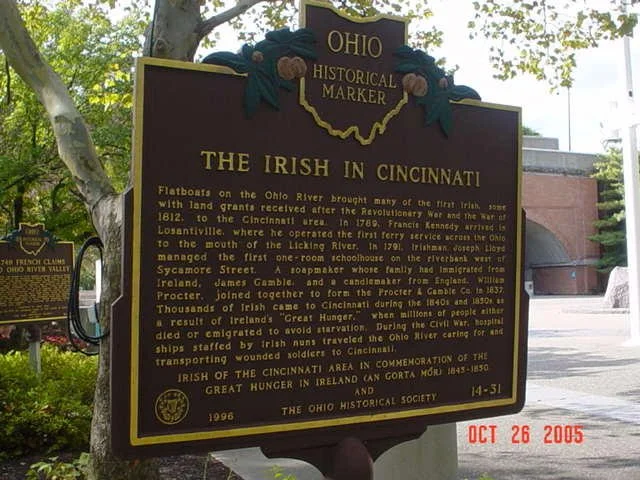
Begin at Ohio Historical Marker 14-31, “The Irish in Cincinnati,” at Bicentennial Commons at Sawyer Point, near 801 E Pete Rose Way. The marker is a compact orientation briefing. It speaks to why Irish people left, why Cincinnati drew them, and how quickly the community’s presence became civic and cultural.
Read it slowly. You will see the themes that recur across the rest of the day: work and housing, education, religious life, and the way immigrant communities built social infrastructure that outlasted a single generation. The riverfront location matters because it keeps you honest about the scale of movement involved. Cincinnati’s Irish history is not an abstract heritage label. It is a migration story anchored to a working river city.
Stop 2: the West End’s lived history
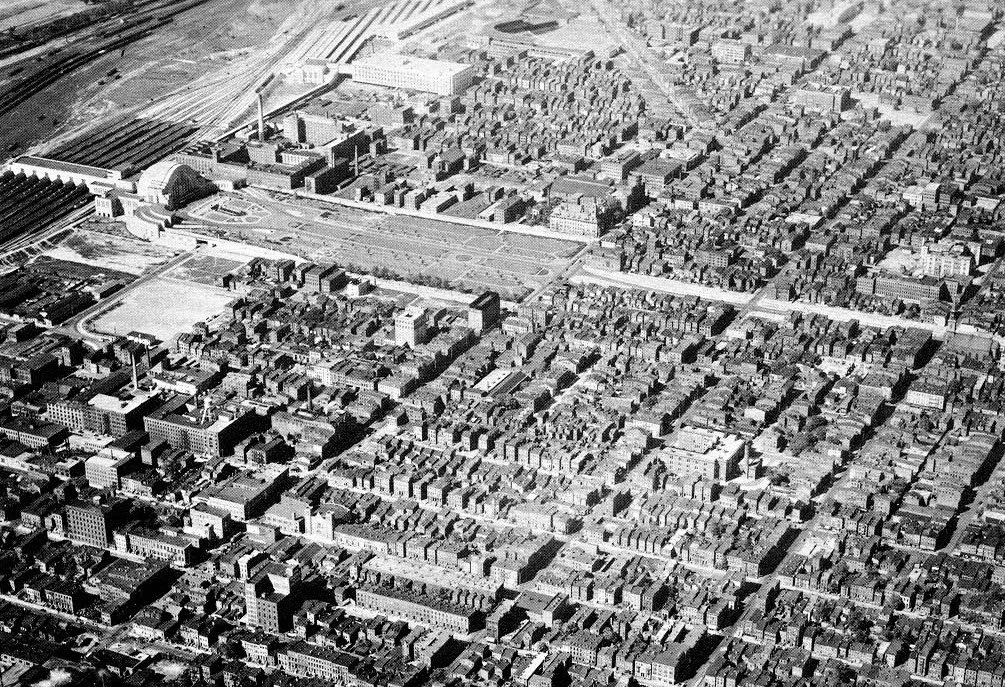
From the marker, head west into the West End. This neighborhood is where Cincinnati’s immigration story becomes tangible, even when the original streetscapes have changed. Cincinnati Preservation’s West End overview notes early development patterns and explicitly references newly established Irish communities in the neighborhood’s broader immigrant mix.
Approach the West End like a field reading rather than a museum visit. You are looking for context: the relationship between proximity to work, density, and the way communities formed around institutions and mutual support. The West End’s history also includes later waves of upheaval and removal that complicate what you can see today. That tension is part of the point. The Irish story here is strongest when you treat the neighborhood as a map of forces: immigration, labor, and urban change.
If you want a sharper historical hook while you are there, University of Cincinnati Libraries’ Irish Cincinnati material includes essays that contextualize the working lives of Irish residents and the roles of Irish clergy in later decades through local records.
Stop 3: St. Patrick Church
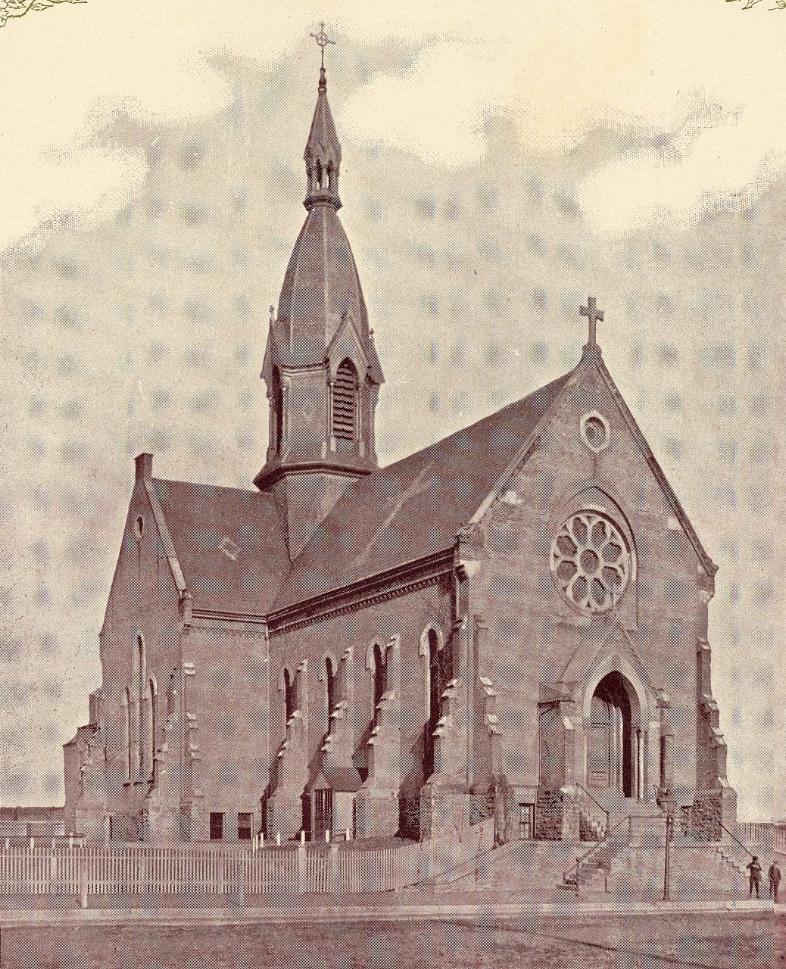
Next, go downtown to the documented location of St. Patrick Church at Third and Mill Streets. OhioLink’s archival finding aid describes St. Patrick Church, Cincinnati, as founded in 1850 when the growing number of Irish immigrants increased, and it identifies the church’s site at the northeast corner of Third and Mill.
This stop is powerful because it has dates and purpose. The UC Libraries Irish Cincinnati timeline states that in 1850, St. Patrick’s Church on Third and Mill Streets was dedicated and staffed by Irish priests to serve the growing Irish population in Cincinnati. Even if the original building is not serving the same role today, the record makes the Irish connection explicit and operational: this was a parish created to meet a community need, not a symbolic gesture.
To make it feel real on the street, pull up one image of St. Patrick’s as it existed in the early 1900s through the Cincinnati & Hamilton County Public Library’s digital collection and compare that historical presence to the modern block. That contrast clarifies why archives and markers matter in Cincinnati. The city’s Irish heritage often lives in documentation, in the names and dates that locate what once stood, and in the institutions that evolved or relocated.
Stop 4: Irish life in Mount Adams
Finish in Mount Adams at Holy Cross–Immaculata, where Cincinnati’s ethnic Catholic history becomes legible in a single neighborhood. The Ancient Order of Hibernians’ Cincinnati St. Patrick division describes a clear structure: in Mount Adams, there were two Catholic churches serving different immigrant communities, Holy Cross for Irish families and Immaculata for German families. The same source states that Holy Cross parish was established in 1873 to serve Irish immigrants on the hill and that Immaculata was dedicated in 1860.
The parish itself reinforces the Irish connection. Holy Cross–Immaculata’s history page notes that Holy Cross primarily served Irish immigrants and that parishioners later joined with Immaculata as the Holy Cross–Immaculata parish. This is one of the cleanest “place explains history” moments in the city. Geography shaped community boundaries, and churches served as identity anchors that were both spiritual and social.
If you want a living-tradition layer, the parish also documents the long-running practice of praying the Immaculata Steps on Good Friday and ties it to Cincinnati Catholic history and Archbishop Purcell’s encouragement of devotion associated with a shrine to the Virgin Mary. Even when your day is focused on Irish Cincinnati, Mount Adams shows how Irish identity sits inside a broader Catholic immigrant framework that Cincinnati still carries.
A one-day itinerary you can run without friction
9:00 AM
Start at Ohio Historical Marker 14-31 “The Irish in Cincinnati,” Bicentennial Commons at Sawyer Point (near 801 E Pete Rose Way). Read both sides, take notes on themes you want to track: labor, housing, education, faith, civic life.
9:30 AM
Drive to the West End. Spend 30 to 45 minutes doing a slow loop and a short walk. Bring up Cincinnati Preservation’s West End overview as your on-site context read so you can connect what you see to documented neighborhood history.
10:30 AM
Head to Third and Mill Streets for the St. Patrick Church site. While standing at the corner, read the UC Irish Cincinnati timeline entry about the 1850 dedication and Irish staffing. Then open the OhioLink finding aid to lock in the parish’s 1850 founding context and location details.
11:30 AM
Lunch downtown or in Over-the-Rhine, then use the break to skim one UC Libraries Irish Cincinnati resource page if you want more texture about clergy or community records.
1:00 PM
Drive to Mount Adams and spend 60 to 90 minutes at Holy Cross–Immaculata. Read the parish history summary about Holy Cross serving Irish immigrants, then walk the steps area and take in the city views that helped make this hilltop a landmark.
2:30 PM
Optional close: return to the riverfront marker and reread it. The story will land differently after you have “walked the chapters” across neighborhoods and institutions.
This itinerary treats Irish Cincinnati as a real travel experience rather than a trivia list. It starts with a public historical statement, moves through a neighborhood shaped by immigration and urban change, locks onto a precisely dated Irish parish designed for an immigrant population, and ends at a hilltop site where ethnic parish life is still readable in the landscape. The result is a day that feels both grounded and expansive, with Cincinnati itself doing the storytelling.