
Seed Money for Survival
The most dangerous phrase in pediatric oncology is not "we need more time." It is "we need more data." This creates a heartbreaking paradox for researchers. You cannot get major federal funding without proof that your idea works. You cannot get that proof without money to run the experiments. This gap is known as the "Valley of Death." Promising cures often die here before they ever reach a child.
CancerFree KIDS just built a massive bridge across that valley.
The organization announced a record-breaking $1.65 million investment on November 20. This funding targets research at Cincinnati Children’s Hospital Medical Center and Nationwide Children’s Hospital. It represents the largest single-year funding increase in the non-profit's 23-year history. This milestone includes a historic $1 million allocation to Cincinnati Children’s.
Buying the First Tank of Gas
The National Institutes of Health (NIH) is a crucial engine for medical progress. However, it typically funds low-risk projects that are already in motion. Pediatric cancer receives only about 4% of that federal budget. This leaves innovators stranded at the starting line.
Jill Brinck, the executive director of CancerFree KIDS, understands this economic bottleneck. She notes that every dollar raised provides more opportunities for researchers to explore less toxic treatments.
The organization uses a smart dual-track strategy. New Idea Awards act as seed funding for high-risk concepts. Accelerator Awards function like Series A funding to push proven ideas toward clinical trials. This model works. The organization has invested $12.5 million since 2002. Those initial grants have helped researchers secure millions in follow-up federal funding.
Hacking the Cancer Code
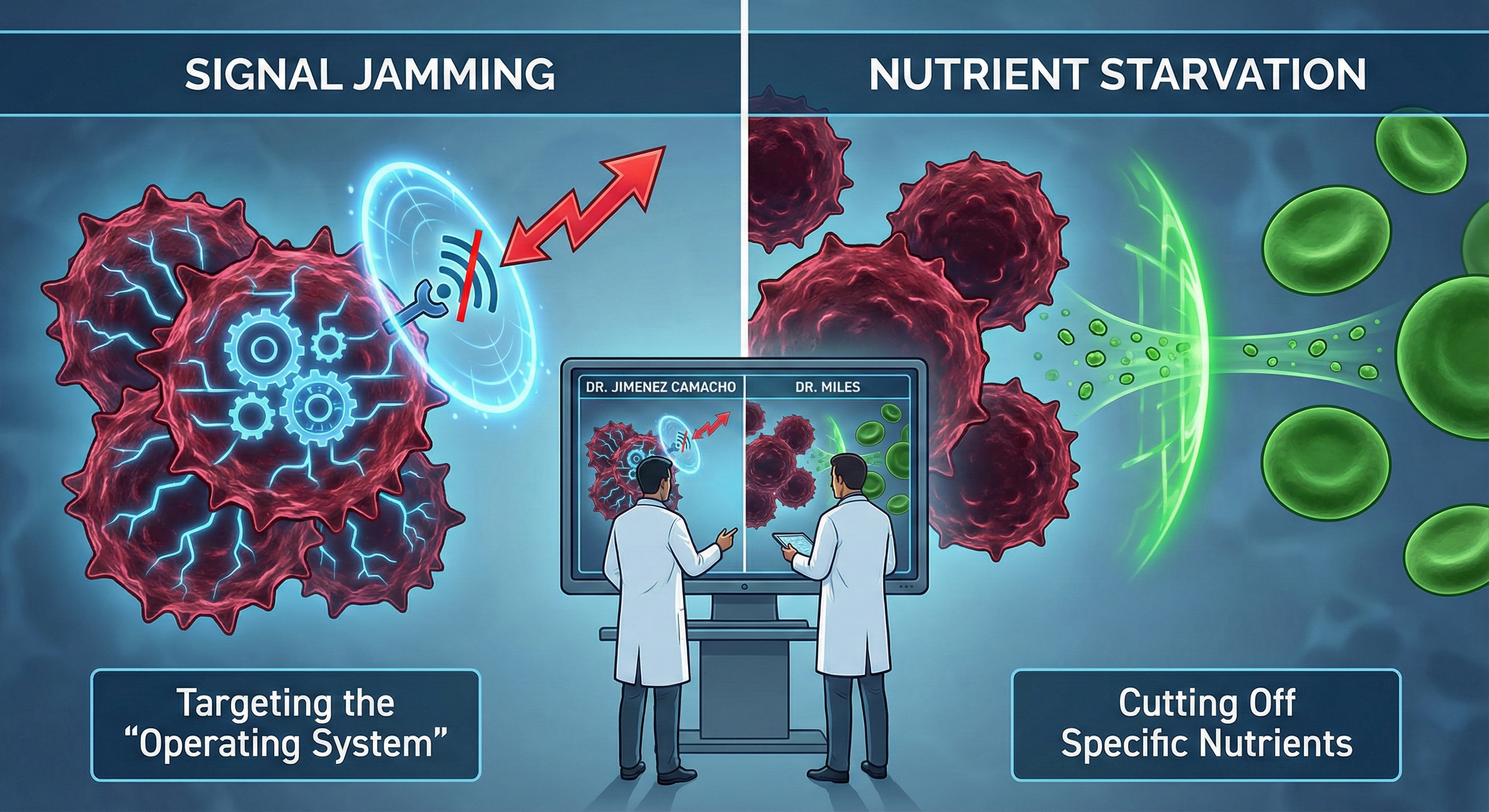
The 2025 grant recipients are moving beyond standard chemotherapy. They are using genetic engineering and metabolic science to outsmart tumors.
Several projects focus on Acute Myeloid Leukemia (AML). This is a notoriously aggressive blood cancer. Researchers like Dr. Karina Elizabeth Jimenez Camacho and Dr. Linde A. Miles are looking at the cancer's "operating system." They want to jam the signals that tell cancer cells to grow. Other scientists are studying how to "starve" leukemia by cutting off its access to specific nutrients without harming healthy cells.
The investment also targets solid tumors. Dr. Kelly Gutpell at Nationwide Children’s is studying the "metastatic bottleneck" in osteosarcoma. She wants to know how bone cancer survives its journey to the lungs. Understanding this travel plan is the first step to canceling the trip.
Night Vision for the Immune System
Perhaps the most exciting frontier is immunotherapy. This includes CAR-T cell therapy.
Imagine your immune cells are soldiers. They sometimes struggle to see cancer because the disease wears a disguise. CAR-T therapy takes those soldiers out of the body. Scientists genetically upgrade them in a lab. They give the cells a new receptor that acts like night-vision goggles. These upgraded cells are put back into the patient to hunt down the cancer.
Current versions of this therapy are slow to manufacture. Dr. Meisam Naeimi Kararoudi is working on "off-the-shelf" CAR-T cells. This would allow doctors to treat children immediately without waiting weeks to engineer the patient's own cells.
Gentler Cures for Growing Kids
The ultimate goal is not just survival. It is a quality of life. Standard treatments often leave children with lifelong health issues. These new projects aim for "sniper" precision rather than "shotgun" blast approaches.
Dr. Stella Davies of Cincinnati Children’s calls this funding crucial to progress. She is right. This $1.65 million investment does more than pay for test tubes. It buys hope. It ensures that the next breakthrough does not disappear in the Valley of Death. It gives brilliant ideas a chance to grow up so that children with cancer can do the same.