
Bridge Down Pig On
Every marathon has a story. Some are written by weather, some by fitness, some by the reckless optimism of a pacing plan that looks brilliant at mile three and dangerous at mile twenty. The 2026 Flying Pig Marathon and Half Marathon arrive with a different kind of plot twist. A bridge came down, the map had to change, and one of the Midwest’s defining race weekends now heads into spring with newly certified courses, fresh strategy questions, and a sharper sense of what makes this event special in the first place. The official 2026 course announcement was published March 16, and Flying Pig organizers say both the full and half marathon routes are now certified. That certification makes the courses eligible for official standards tied to rankings, records, and Boston qualifying times.
For runners, that sentence lands with real weight. Certification is not decorative language. It confirms that the distance is official and that the course counts in the ways serious runners need it to count. The Flying Pig’s own policies page states the marathon is a certified course and a Boston qualifier when completed as a live event, which gives the 2026 map immediate relevance for anyone building a spring training block around a goal time.
bridge demolition Brings big changes
The reason for the redesign is Covington’s Fourth Street Bridge, the crossing that linked Newport and Covington and played a role in prior Flying Pig routing, was demolished on March 2 as part of a Kentucky Transportation Cabinet replacement project. City and regional reporting described the demolition as a major milestone toward a new bridge that will not be complete until 2028. That left Flying Pig organizers with a challenge that reached beyond event operations. They had to preserve the identity of a race built on river crossings, city neighborhoods, and the feeling of moving through an entire region instead of circling a single district.
That matters because the Flying Pig has always been more than a distance marker stretched over asphalt. The event’s official description still presents the marathon as a tour through Cincinnati, Covington, Newport, Mariemont, Fairfax, and Columbia Township. That regional sweep is part of the race’s personality. It is part spectacle, part city tour, part test piece. Runners do not come to the Pig expecting a sterile time trial. They come for neighborhoods, bridges, climbs, noise, and the peculiar joy of feeling like the whole course is in conversation with them.
The new route keeps the soul of the race intact
The easy reaction to a forced reroute is to assume loss. That reading misses what the 2026 course actually represents. This is not a diminished version of the Flying Pig. It is an adaptive version of the Flying Pig, and that distinction matters. The official announcement and follow-up coverage make clear that organizers worked to preserve the challenge, scenery, and neighborhood energy that define the event while solving a major infrastructure problem.
Local reporting from WVXU says the marathon remains a Boston qualifier and still travels through six communities. That continuity is important. A race like the Flying Pig earns trust over time because runners know what kind of experience they are signing up for. The hills have a reputation. The crowd support has a reputation. The citywide reach has a reputation. The 2026 route changes the geometry without changing the race’s identity.
What changed on the road
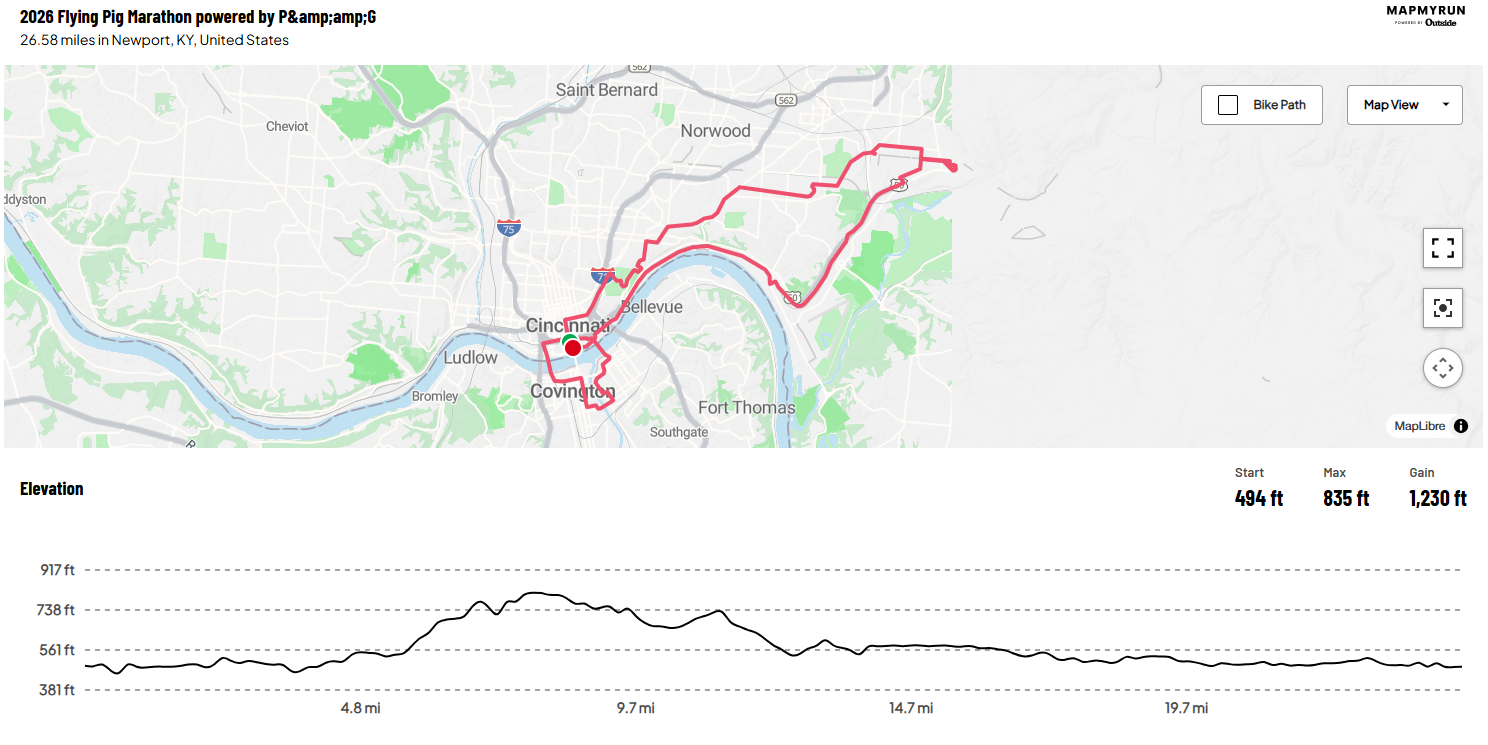
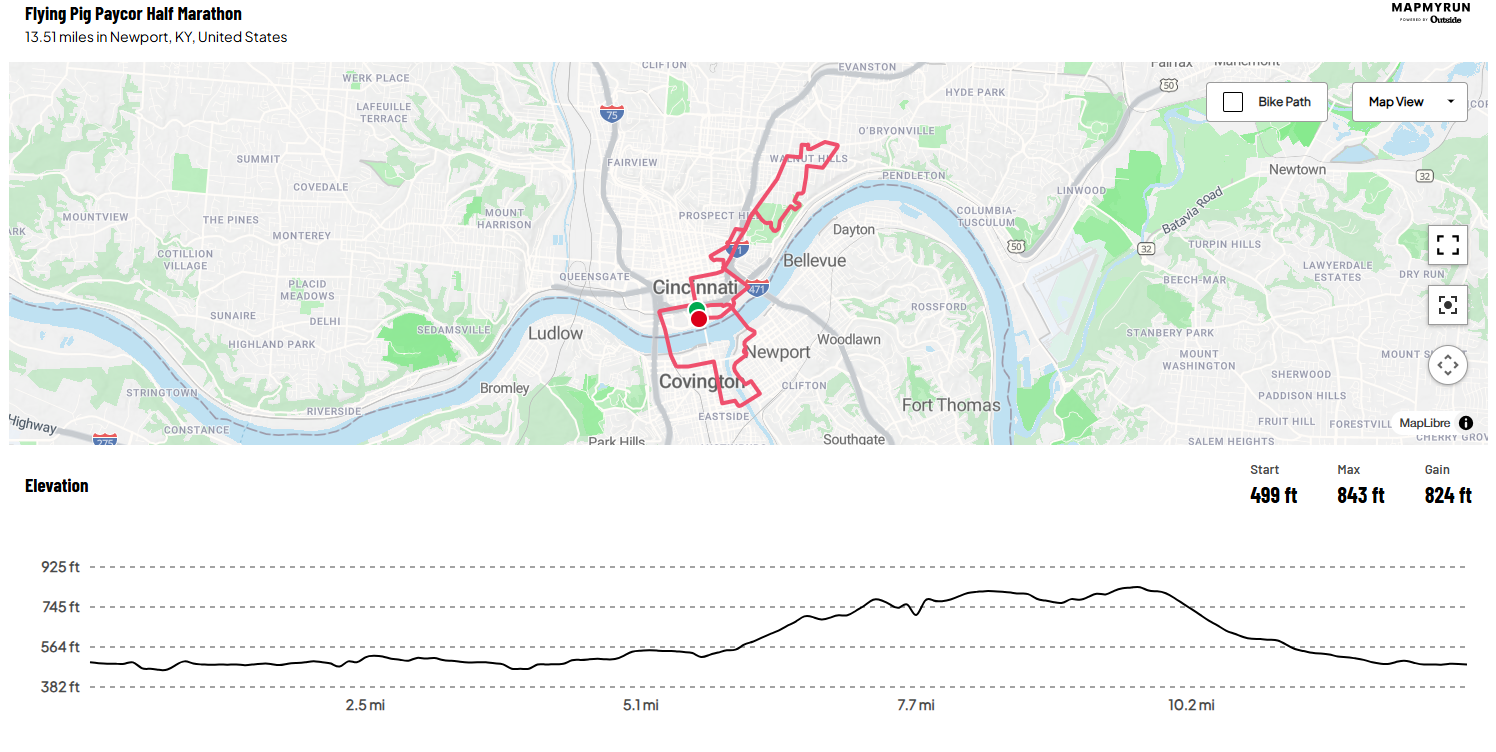
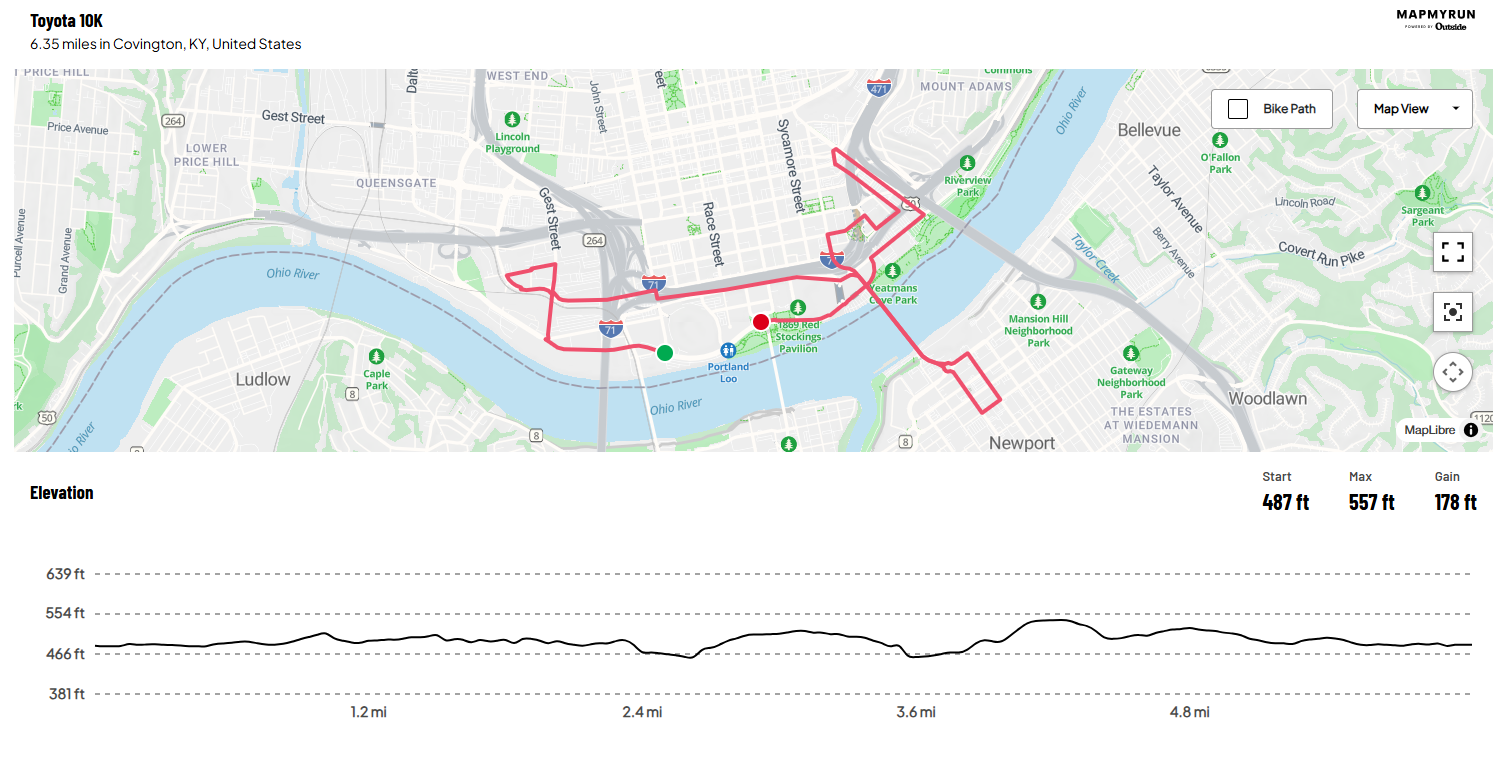
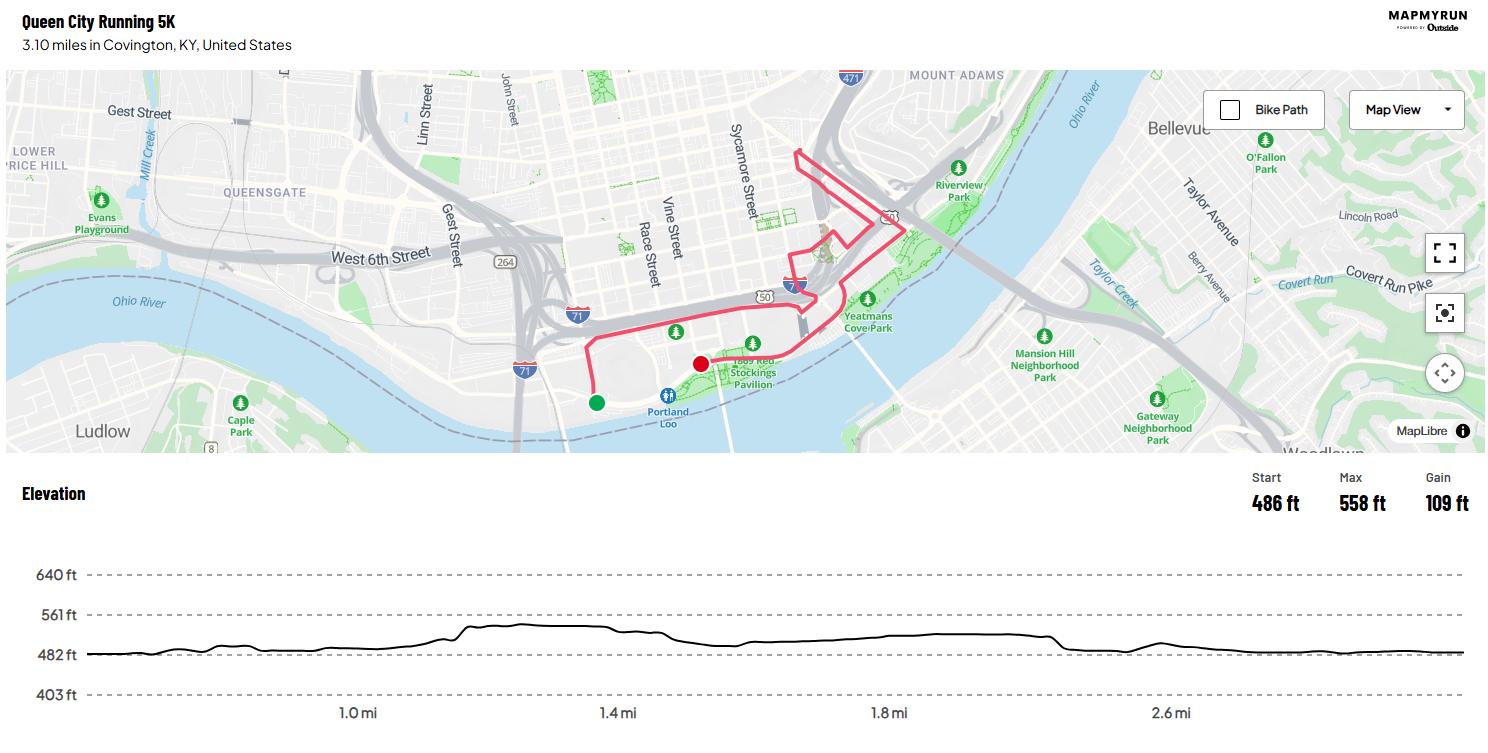
The revised course now spends more of its early miles weaving through Northern Kentucky in a different way. According to the official course description and turn by turn information, runners head into Kentucky on the Taylor Southgate Bridge, pass through Newport, cross into Covington using 11th Street and the Girl Scout Bridge corridor, and return to Cincinnati over the Clay Wade Bailey Bridge before rejoining the familiar city climb toward Eden Park and the eastern neighborhoods.
That route shift changes race dynamics in several subtle but important ways. The early and middle miles become more technical. More turns mean more interruptions to rhythm. More urban transitions mean pacing becomes a little less automatic and a little more attentive. Runners who chase precise splits will feel that. So will runners who rely on flow rather than checking a watch every half mile. A course can be honest and still feel different underfoot. This one should.
There is also a crowd element to consider. Moving away from older industrial stretches and into denser downtown corridors creates the potential for stronger spectator presence, more noise, and more visual energy. Reports on the revised route note the removal of some awkward segments, including the Central Parkway out and back and the bike path section in Mariemont. Those changes should make the course feel cleaner and more continuous, even if the total effort remains every bit as real.
The hills still matter because this is still the Flying Pig
No one should read “new route” and assume “easy route.” Once the course returns to Cincinnati and starts climbing through the city, runners are back in familiar Flying Pig territory. WVXU reported that after the 7th Street section, much of the route is mostly the same, aside from smaller adjustments made to balance distance. The official marathon page continues to describe the course as a diverse tour of some of the best neighborhoods in the area, and veterans of this race know that “diverse” includes work.
That is one of the reasons the Flying Pig commands respect. It is a race with personality and resistance. It gives runners scenery, support, and a challenge profile that asks for patience early and resilience later. The 2026 edition appears set to preserve that formula. The opening chapters have changed. The central thesis has not.
This is a lesson in what great races do well
The strongest races know how to absorb disruption without losing character. That is what the Flying Pig appears to have done here. The bridge demolition was not a minor inconvenience. It removed a real piece of the event’s established architecture. The response from organizers was to redesign, certify, communicate, and preserve the signature elements that runners care about most.
That should resonate beyond Cincinnati. Road racing in modern cities depends on cooperation with infrastructure schedules, municipal priorities, and evolving urban space. Routes shift. Construction happens. Access changes. The races that endure are the ones that stay credible under pressure. The Flying Pig’s 2026 course announcement reads like evidence of that credibility.
Why runners should be excited now
The new Flying Pig course gives runners exactly what a great race should give them in late winter and early spring: a real target. There is now a certified route to learn, a legitimate result to chase, and a race weekend that still promises the challenge and citywide theater that made the Flying Pig a bucket-list event for so many runners in the first place.
Some runners will show up chasing Boston. Some will show up chasing a personal record. Some will show up because the Flying Pig is one of those races that feels alive from the first mile to the finish chute. All of them now have the same assignment. Study the map. Respect the turns. Prepare for the hills. Trust the certification. Then go see what the new version of a classic race has to say.